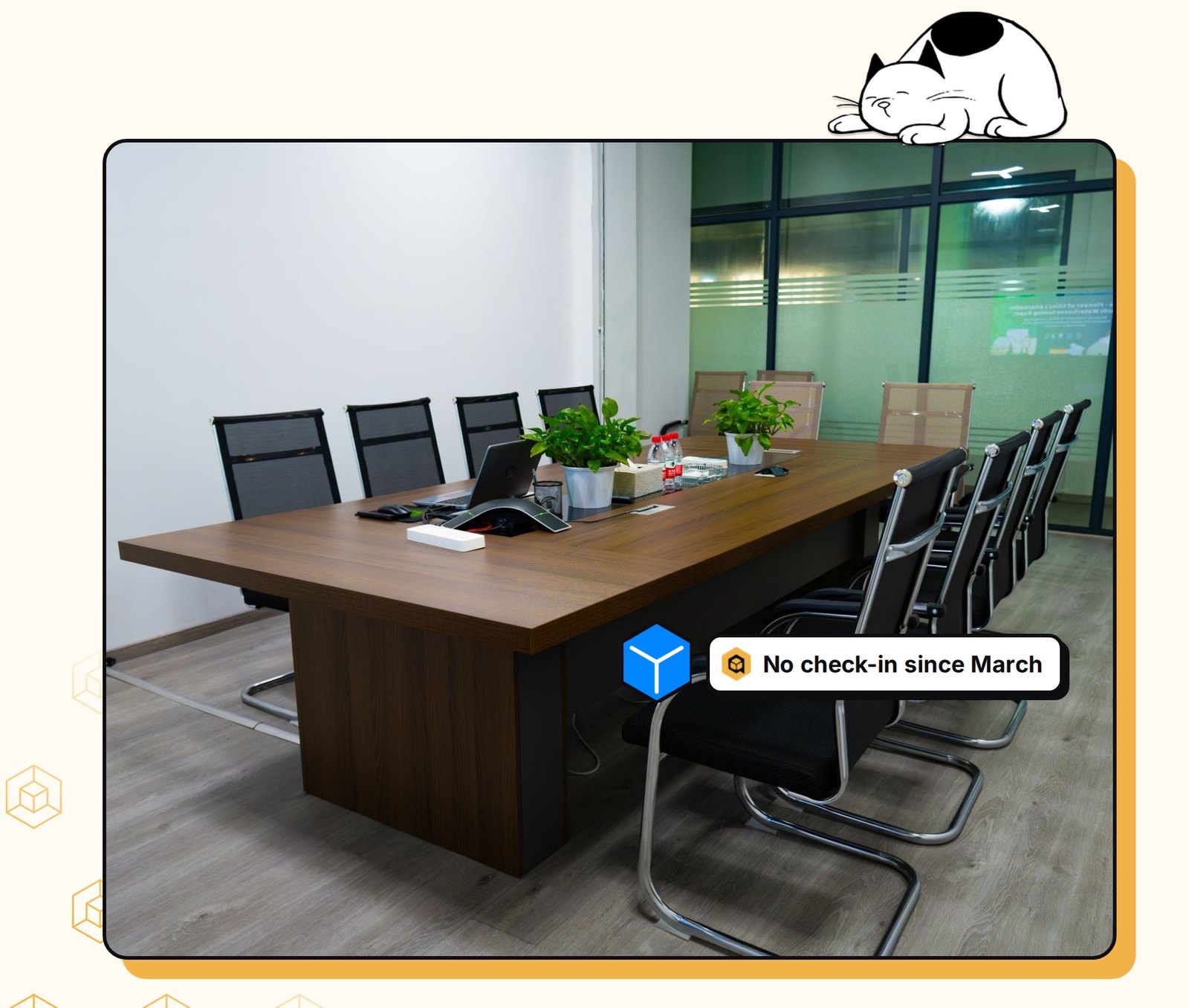


Most goals don't fail in a meeting. Nobody stands up in week nine and announces that the key result is dead. What happens is quieter. The weekly update gets skipped once, then twice. The confidence score stays at "on track" because nobody has touched it. The last real comment on the goal is from months ago.
By the time the quarterly review comes round, the goal hasn't failed so much as gone missing. And by then, there's no time left to recover it.
This post is about that silent stretch, why it happens, how to spot it, and what to do about it while there's still time.
Silence is the first symptom
When a goal is going well, people talk about it. They share the win, post the chart, mention it in stand-up. When a goal is going badly but someone is fighting for it, people talk about it too. They ask for help, flag the blocker, argue for more resource.
The goals that fail are usually the ones nobody is talking about. Silence isn't neutral. It's the earliest and most reliable sign that a goal has lost its owner's attention, and attention is what goals run on.
A goal nobody has mentioned in six weeks isn't on track. It's unknown.
Why goals go silent
It's tempting to blame the owner. In practice, the causes are almost always structural.
The update has no audience
If nobody reads the check-in, people stop writing it. A status field that disappears into a tool nobody opens is a chore with no pay-off, and chores get dropped first when the week gets busy.
Status became a performance
In some teams, "at risk" invites a grilling. So people keep the colour green and wait, hoping things recover before anyone looks closely. The goal goes silent because the honest update feels expensive.
The owner is busy doing the work
Ironically, the people closest to the work are often the ones least likely to report on it. Shipping feels more useful than writing about shipping. Without a nudge, the update slides to next week, then the week after.
The cadence decays after kickoff
Planning season is loud. Everyone is aligned, the deck is fresh and the goals are on the wall. Then the quarter starts, the urgent work arrives and the rhythm that was meant to carry the goals through fades by week four.
What "Silent" looks like
You don't need a dashboard to spot it. Look for these signals,
- No check-in for two or more cycles of the agreed cadence.
- A score that hasn't moved in weeks, in either direction.
- Updates that are copied forward word for word.
- A key result with no projects or work linked to it.
- An owner who has changed teams, gone on leave or picked up a bigger fire.
- A goal that only comes up when someone senior asks about it.
Any one of these is worth a conversation. Two or more and the goal is probably already off course.
Treat silence as a signal, not a failing
The fix isn't more reporting. It's making silence visible early, and making the response to it supportive rather than punitive.
Give every goal a cadence, an owner and an audience
Agree how often each goal should be updated (weekly, fortnightly), who is responsible and who reads it. An update to a specific audience gets read. Ones with no audience don't.
Make the check-in small
Three questions are enough. What moved? What's in the way? How confident are you now? If it takes more than a few minutes, people will postpone it.
Ask, don't audit
When a goal goes silent, the first message should be a question, not a reminder of the rules. "Haven't seen an update on onboarding activation in a while. Anything blocking it?" gets an honest answer far more often than "Please update your OKRs by Friday."
Escalate the silence, not the person
If a goal stays silent after a nudge, raise it at the next review as a question about the goal. Is it still the right priority, does it still have an owner, does it need help? That keeps the conversation about the work and makes it safe to say "we've stalled".
Close the loop
When someone flags a risk, respond. Unblock, reprioritize or explicitly accept the risk. Nothing teaches a team to go silent faster than raising a flag and hearing nothing back.
Where Tess comes in
All of the above works, but it relies on someone noticing the silence in the first place, and that someone is usually a chief of staff or a strategy lead with a spreadsheet and too little time.
That's the job we built Tess for. Tess checks your goals and initiatives on the cadence you set, notices when one goes silent and asks the owner a short question where they already work, Slack for example. If the silence continues, Tess lets the right person know before the quarter runs out rather than after.
Tess doesn't wait to be asked. Your goals shouldn't have to either.